
Learn how to make an offer on a house with confidence. Understand pricing strategy, negotiation terms, counteroffers, and what happens after you submit.
If you’re currently researching how to make an offer on a house, you’re not alone. This part of the home-buying process often feels confusing because many explanations focus on paperwork instead of strategy. Buyers are told what forms to sign, but rarely how to think through an offer in a way that improves the likelihood of acceptance, without overpaying.
By the time you finish this article, you’ll understand how to approach an offer with clarity and confidence. You’ll learn how to read the situation behind a listing, identify leverage before talking numbers, and work with your agent (that would be me) in a way that leads to smarter decisions and stronger offers. Instead of guessing, you’ll walk away with a framework you can use for any home, in any market.
Now let’s get into the part no one explains well—but should.

Make An Offer They Can't Refuse
By Learning to Recognize Potential Negtiation Opportunities
Before you determine an offer price—before contingencies, before timelines—there’s a step many buyers skip, and it directly impacts how your offer should be structured.
When you find a home you may want to make an offer on, your first move isn’t numbers. It’s positioning. You need to understand who you’re negotiating with and why the property is on the market. That context determines how much flexibility exists and where pressure may already be present.
You won’t always get the full story. Sellers don’t generally advertise their circumstances. But there are signals:
- Time on market is one of them. A home that’s been sitting often points to reduced competition and more room to negotiate.
- Prior price changes matter too. How aggressively and quickly have they lowered the price?
- So does the seller’s likely next move. Do they need to sell this home in order to close on another property?
These details don’t guarantee leverage, but they often reveal where it can exist.
This step isn’t about guessing or playing games. It’s about understanding the situation before you talk numbers, so your offer is grounded in reality—not emotion—and aligned with how the seller is likely to respond.
From there, price becomes a decision, not a shot in the dark.
Below is a quick list that may help you see your positioning clearly:

Factors That Could Influence Your Negotiation Position
How to Make An Offer On A House
| Signal You Can Identify | What It Usually Indicates | How It Affects Your Position |
|---|---|---|
| Longer time on market | Reduced buyer competition or earlier pricing misalignment | Increases room to negotiate on price, terms, or concessions |
| Multiple price reductions | Seller expectations have shifted or pressure has increased | Strengthens your ability to come in below list or request credits |
| Pending purchase or relocation | Seller may need proceeds to close on another property | Creates time pressure that can favor cleaner or faster offers |
| Vacant property | Carrying costs with no occupant benefit | Often increases willingness to negotiate to stop ongoing expenses |
| Rented property nearing lease end | Timing constraints or transition planning | Allows you to negotiate closing dates or price flexibility |
| Estate sale or trust-owned property | Decision-making may be procedural rather than emotional | Can favor straightforward, well-documented offers |
| Investor-owned listing | Numbers-driven decision, not lifestyle-driven | Shifts leverage toward price, terms, and certainty of close |
| Seasonal listing timing | Missed peak buyer demand | Improves odds for below-ask or concession-based offers |
| Listing returned after failed contract | Prior deal fell apart (inspection, financing, appraisal) | Opportunity to structure an offer addressing past issues |
| Limited showing activity or slow open houses | Weak buyer engagement | Supports more assertive initial positioning |
You don’t need every signal to be present. Even one or two can change how aggressively you structure your offer. The goal isn’t to exploit—it’s to align your offer with reality, rather than assuming every listing could become a bidding war.
This is how strong offers are built.
The Three Positions That Shape Every Offer
How to Make An Offer On A House
Once you understand seller positioning, the next step is knowing what actually drives leverage in a real estate negotiation. Every offer — strong or weak — is shaped by three core positions. Miss one, and you’re negotiating with blind spots.
1. The Seller’s Emotional and Urgency Position
This is about motivation, not personality.
You’re not trying to psychoanalyze the seller — you’re trying to understand how badly they need this transaction to move forward. Urgency changes everything. A seller who needs to close has a very different tolerance for price, timelines, and concessions than one who is simply “testing the market.”
Signals that affect this position include:
-
Timing pressures (relocation, contingent purchases, financial deadlines)
-
How long the property has been listed
-
Whether price adjustments have already occurred
-
How flexible the seller appears on closing dates or terms
When urgency is present, leverage and opportunity often exists — even if the list price hasn’t changed yet.
2. The True Condition of the Home
This is where logic replaces emotion.
A home’s actual condition — not how it looks on a showing or in photos — directly impacts what your offer should include and how it should be structured. This position is rooted in facts, not feelings.
Key factors here include:
-
Inspection findings and risk areas
-
Age and condition of major systems (roof, HVAC, plumbing, electrical)
-
Deferred maintenance or cosmetic updates masking larger issues
-
Appraisal sensitivity based on condition and recent comps
Condition answers one critical question: What am I really buying, and what could this cost me after closing?
Strong buyers don’t ignore condition — they price it into their offer.
3. The True Location of the Home
Location isn’t just city, ZIP code, or neighborhood name. It’s the on-the-ground reality of where that house actually sits — and this is where local knowledge quietly matters most.
Two homes can look identical on paper and be priced the same, while carrying very different long-term risks and resale outcomes based on factors that never show up in the listing description.
This includes things buyers often don’t discover until it’s too late:
-
Crime pattern creep, not crime stats in general:
Is the home bordering an area with rising calls, a growing inventory of short-term rentals, or transient activity that’s slowly shifting the feel of the neighborhood? -
Flood history, not just flood zone:
Has this block experienced nuisance flooding, sewage & drainage problems, repetitive loss claims, or storm-related access issues over the past 10–20 years — even if insurance maps say it’s “fine”? -
Environmental or land-use history:
Former agricultural land, dumping areas, industrial use, or past remediation projects can affect soil, lending, or buyer perception down the road. -
Proximity to potential problems:
Highways, drainage canals, commercial or industrial areas, utility corridors, or undeveloped tracts slated for future use.
This is the kind of information buyers don’t get from listing descriptions. It’s learned through years of watching how neighborhoods behave over time.
Understanding the true location of a home doesn’t always change whether you want to buy it — but it should absolutely influence your offer.
Turning Insight Into a Real Offer
How to Make An Offer On A House
Once you understand your positioning, the home’s true condition, and the realities of its location, you stop guessing — and start structuring.
You are no longer asking, “What should I offer?”
You are answering, “What does this situation justify?”
Step 1: Decide Your Price Range — Not a Single Number
Thinking clearly about how to make an offer on a house, your research should give you three numbers:
-
Your ideal entry price (based on leverage and risk)
-
Your defensible max (the highest number that still makes sense if pushback occurs)
-
Your walk-away point (where the deal stops being rational)
This prevents panic counteroffers and keeps you in control if negotiations shift.
Step 2: Use Terms to Support (or Replace) Price
Price gets attention.
Terms get deals accepted.
Depending on what you’ve learned through your due diligence, your offer can be strengthened by adjusting:
-
Closing timeline – If a seller needs to move quickly, a shorter close can be more valuable than a higher price.
-
Inspection periods – A shorter inspection window can reassure the seller that you’re serious while still protecting yourself.
-
Appraisal structure – You might agree to cover a defined appraisal gap. For instance: “Buyer agrees to cover up to $10,000 of any appraisal shortfall.”
-
Repair requests vs. credits – Instead of asking the seller to fix items before closing, you may request a credit at closing. This avoids delays, eliminates reinspection issues, and gives you control over the quality of the work.
-
Occupancy or rent-back flexibility – If the seller needs to remain in the home for two weeks after closing, offering a rent-back period can make your offer far more attractive without increasing your purchase price.
In many situations, the winning offer isn’t the highest — it’s the one that solves the seller’s actual problem with the least friction.
Once the Strategy Is Set, It’s Time to Make the Offer
How to Make An Offer On A House
Once you’ve determined your offer price and decided which negotiation levers you’re willing to use, the next step is execution. This is where all that preparation pays off.
Making an offer on a house isn’t an open-ended back-and-forth. It follows a defined process, moves quickly, and requires clear communication between you and your agent.
Here’s how it actually works.
How the Offer Process Works
Once you’ve decided on price and terms, the process becomes very straightforward. Here’s what actually happens:
-
You confirm final decisions
Price, terms, contingencies, timelines, and any strategic adjustments are locked in. -
Your agent drafts the offer
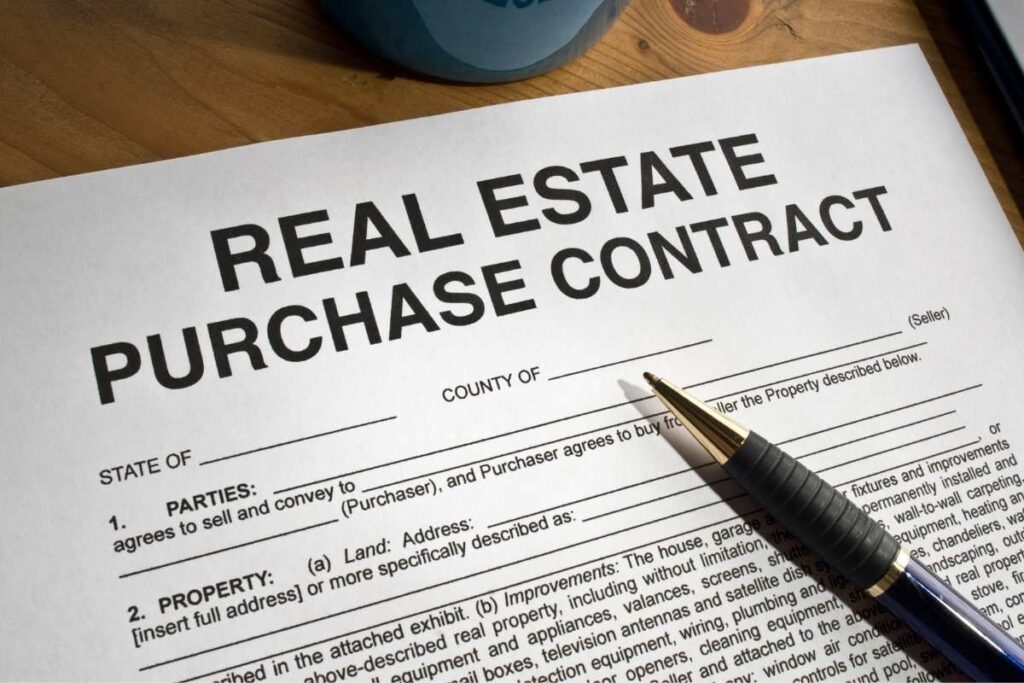
The offer is prepared using the state-approved purchase contract and tailored to the strategy you’ve chosen. -
You review the offer
You’ll review the full contract to confirm accuracy — price, dates, contingencies, and key terms. -
You sign electronically
Most offers are signed digitally and can be completed in just a few minutes. -
The offer is submitted to the seller
Your agent delivers the offer to the listing agent and confirms receipt. -
You wait for a response
The seller will accept, reject, or counter. At this stage, no action is required from you until a response is received.
That’s it. There’s no ongoing negotiation until the seller responds.
What Happens Next
Once the seller responds, one of three things happens:
-
Your offer is accepted
-
A counteroffer is issued
-
The offer is declined
Each outcome gives you clear next steps — and none require rushed decisions.
If the offer is accepted, the focus shifts to protecting you through inspections, timelines, and follow-through, making sure nothing slips simply because the deal moved quickly.
If a counteroffer comes in, this is where experience matters most. As a REALTOR® with over 16 years of successful closings, I help clients identify what the counter actually changes, including any impacts that aren’t immediately obvious. Together, we review how the revised terms affect your price limits, risk exposure, timelines, and overall goals so you can decide whether accepting, countering, or walking away is the right move.
If the offer is declined, it’s not a failure. It’s information. A strong agent helps you interpret what that rejection actually means and whether it changes how you approach this home, or confirms it was never the right deal to begin with.
Are You Ready?
How to Make An Offer On A House
Strong offers don’t happen by accident. They’re built on preparation, experience, and an understanding of what actually drives outcomes in real negotiations.
If you’re ready to make an offer, or need help deciding your next move, working with an experienced REALTOR® can help you protect your position and avoid costly mistakes.
Give me a call today!
This article, How to Make an Offer on a House, is provided for general informational purposes only and is not intended to serve as financial, legal, or real estate advice. Real estate transactions involve unique circumstances, market conditions, and legal requirements that vary by location and individual situation.
Before making any financial or legal decisions related to buying a home, readers should consult with qualified professionals, including a licensed real estate agent, attorney, lender, or financial advisor, who can provide guidance specific to their situation.

How To Make An Offer On A House
Are you ready to take a tour of some of the available homes in SWFL?
Contact me today! I’m here for you every step of the way.


Check out our helpful guide to Buying a Home in Florida. Understanding the Home Buying / Home Selling process is your first step to real estate success!